Search has evolved beyond typing queries into Google. Today, users get answers through AI assistants, chatbots, smart devices, and AI-powered search engines that summarise information instead of just listing websites. This change has introduced generative engine optimisation services, a modern complement to traditional SEO. GEO follows different rules but is critical for brands that want to remain visible where audiences actually search.
Understanding the distinction between SEO and GEO is essential for marketers, business owners, and brand strategists who want to future-proof their online presence. This guide provides actionable insights, real-world examples, and practical strategies to help your brand appear wherever users search.
The Shift in Search Behaviour
Search behaviour has changed dramatically. Users no longer say “Let me Google this.” Instead, they ask conversational AI platforms like ChatGPT, Gemini, and Perplexity. They expect immediate, actionable answers rather than sifting through multiple links.
Key points to consider:
- Users want direct, concise answers instead of long lists of links
- AI summarises information and decides which brands to reference
- Content must be readable for both humans and AI reasoning models
- Traditional SEO alone is no longer sufficient; generative engine optimisation services ensure AI interprets and cites your brand accurately
Brands must focus on creating content that is structured, clear, and designed for both human readers and AI summarisation. Practical tip: Start tracking how AI platforms summarise your content using AI content scanners or website audit online tools to identify missing AI-friendly elements.
How SEO Has Evolved
SEO remains a cornerstone of online visibility, but its focus has shifted from simple rankings to prioritising user intent, trustworthiness, and usefulness. Search engines increasingly reward websites that provide structured, authoritative, and updated information.
Modern SEO practices include:
- AI-driven search integration, where platforms like Google’s search generative experience (SGE) prioritise AI-generated summaries. Brands not optimised for AI risk losing prime visibility
- Authority over keywords, where demonstrated expertise now outweighs keyword density. Topic clusters, internal linking, and strong authority signals are essential
- Technical website excellence, including fast loading speed, mobile responsiveness, and layout stability. Frequent website audit online ensures your site meets evolving standards
- Content freshness, where regular updates, new insights, and refreshed pages improve visibility and help AI recognise authority
Practical example: A blog post about CRM software that is updated monthly with new pricing, features, and user guides is far more likely to appear in AI-generated summaries than a static page last updated years ago.
Generative Engine Optimisation (GEO) Explained
GEO ensures your content appears in AI-generated answers. Unlike traditional SEO, AI platforms do not focus solely on keywords or backlinks. They evaluate the clarity, credibility, and structure of your content.
Core principles of GEO include:
-
AI-readable structure
- Use clear headings, subheadings, and bullet lists
- Include step-by-step or solution-oriented explanations
- Provide structured facts, definitions, and examples
-
Verified brand information
- Keep company details accurate, complete, and consistent
- Ensure all content aligns with your official brand and expertise
-
Credible digital footprint
- Include expert insights, original research, statistics, and references
- Boosts credibility and increases likelihood of AI citation
-
Conversational and question-based content
- Mirror the natural language users type or speak
- Examples include: “How do I optimise my website for AI?” or “What is the best CRM software for small businesses?”
-
Multi-format content
- Include videos, infographics, and charts. AI can reference structured multimedia content more effectively than unformatted text
- Interactive FAQs or quick-reference tables improve AI comprehension
By combining structure with a natural conversational tone and multimedia elements, brands maximise their chances of being directly referenced by AI assistants.
SEO vs GEO: Key Differences
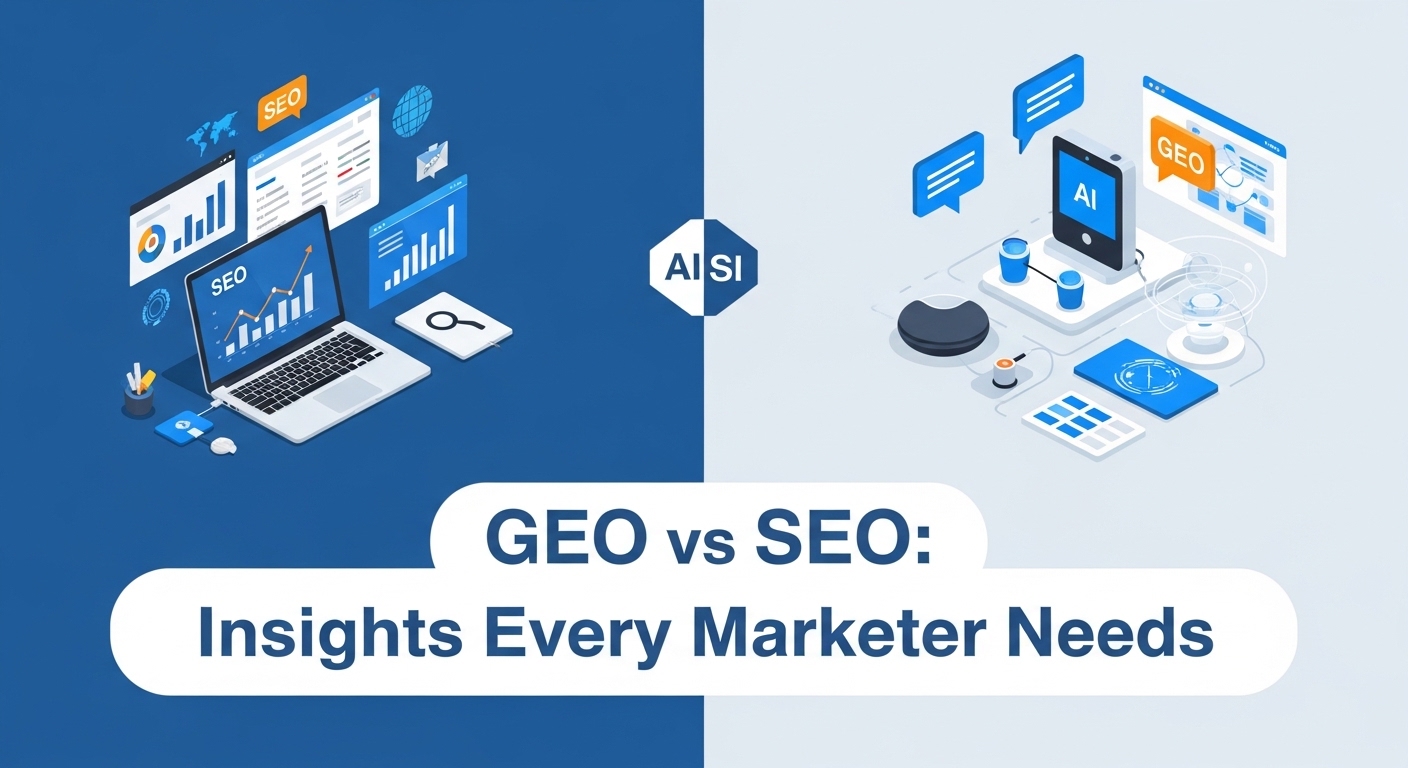
SEO and GEO serve complementary but distinct purposes. SEO targets traditional search engines like Google and Bing and focuses on improving search rankings. GEO targets AI-powered platforms such as ChatGPT, Gemini, Perplexity, and Google’s SGE, aiming to appear inside AI-generated summaries.
Key distinctions:
- SEO relies on keywords, technical optimisation, and backlinks, while GEO focuses on structured, clear content and authority signals
- SEO targets users performing manual searches, whereas GEO targets users asking AI conversational queries
- SEO improves SERP visibility, while GEO ensures direct citation in AI summaries
Even websites that rank highly in traditional search may fail to appear in AI-driven search results if they are not GEO-ready.
Risks of Ignoring GEO
Brands that ignore GEO face several risks:
- AI may skip your website entirely
- AI can rewrite content without citing your brand
- Competitors with structured, credible content are more likely to be featured
- Brands not optimised for GEO risk losing influence over customer decisions
Practical example: Traditional SEO shows a user 10 links for “Best CRM software for small businesses,” with only a few clicks. In GEO-optimised search, a user asks “Which CRM is best for a small business?” AI generates a summary mentioning 3–5 brands. Users select directly from AI answers, excluding brands not referenced.
Actionable Steps for Marketers
- Audit content to ensure it is AI-readable, clear, and structured. Use a website audit online tool or AI content scanners to identify gaps
- Update your website for AI visibility by including FAQs, product comparisons, step-by-step guides, definitions, and structured content
- Combine SEO and GEO strategies to optimise for both search engines and AI assistants simultaneously
- Collaborate with the best SEO agency in Singapore to implement advanced strategies that keep your brand competitive
- Use structured data and voice search optimisation so AI can interpret content accurately
- Diversify content types with infographics, short videos, tables, and charts to improve AI citation
- Track AI citations and adjust content to improve visibility using a website rank checker
Advanced GEO and SEO Tips
- Create long-form, comprehensive answers for complex queries
- Use conversational, user-friendly language
- Update content regularly to reflect the latest trends and insights
- Include authoritative sources to boost credibility
- Monitor AI outputs to see how content is summarised and referenced
- Leverage internal linking to strengthen topic clusters for both SEO and GEO
Conclusion
Search is shifting from links to answers. GEO ensures your brand is referenced in AI-generated summaries, while modern SEO maintains visibility on traditional search engines.
By combining GEO and SEO, brands can:
- Stay discoverable across AI assistants, voice devices, and search engines
- Strengthen credibility and authority
- Reach users wherever they search and make decisions
Brands that structure content for AI, maintain authority, and remain relevant will lead in the evolving digital landscape. Start optimising today to ensure your brand is part of every online conversation. Next steps include auditing content for AI readability, updating FAQs and structured answers, combining GEO and SEO strategies, and monitoring AI and SERP outputs.