
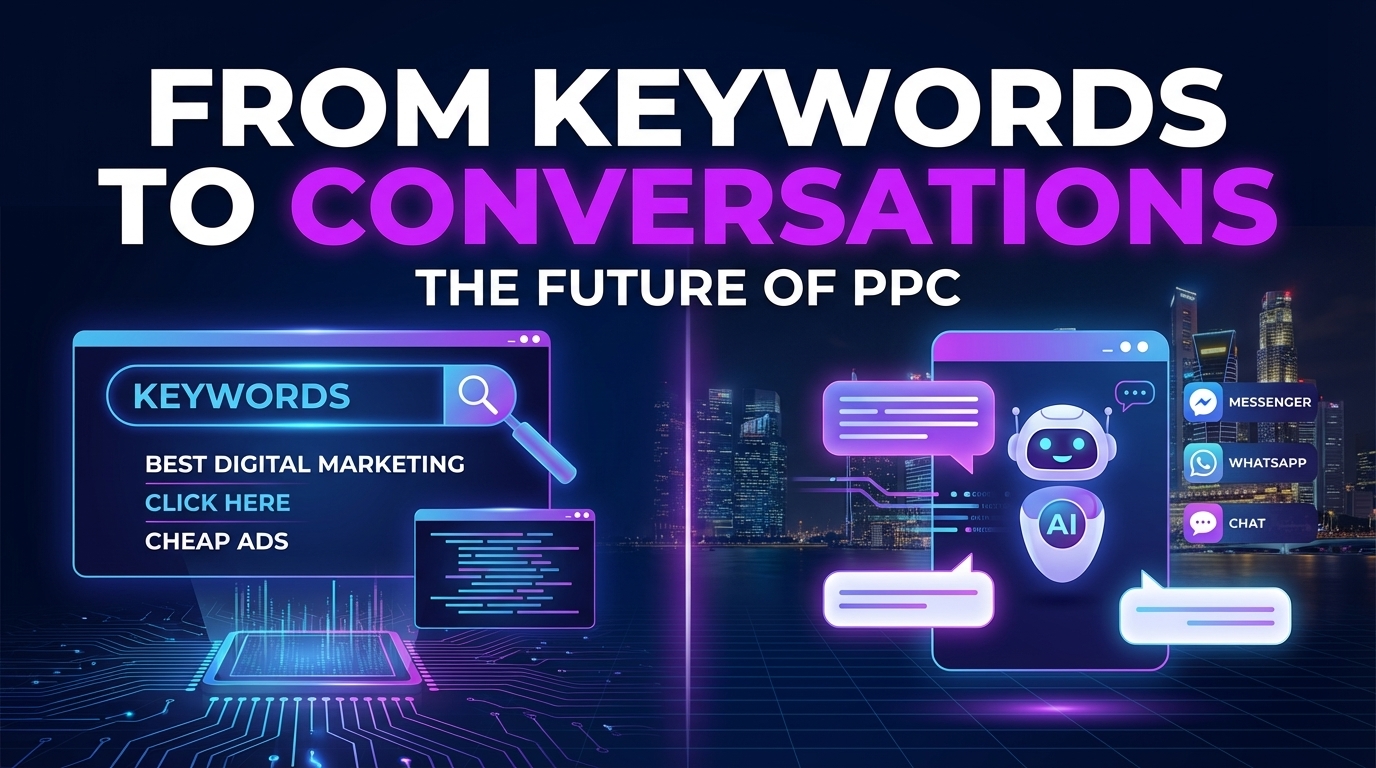
The digital advertising industry has undergone a major transformation. What used to be a simple process of targeting keywords has now evolved into a more intelligent, personalised, and conversation-driven approach.
In today’s competitive landscape, especially in Singapore, businesses can no longer rely solely on keyword bidding to attract customers. Instead, they must focus on building meaningful interactions that guide users through their decision-making journey.
This shift from keywords to conversations is redefining how brands engage, convert, and retain customers. In this guide, you will learn what this transformation means, why it matters, and how PPC marketing plays a critical role in this new era.
The Evolution of Digital Advertising
From Keyword Matching to User Intent
In the early days of digital advertising, success depended largely on selecting the right keywords. Advertisers would bid on search terms and display ads based on exact or phrase matches.
While this approach worked well at the time, it had limitations:
- It focused more on search terms than user intent
- It lacked personalisation
- It treated users as clicks rather than individuals
Today, advertising platforms are far more advanced. They analyse user intent, behaviour, preferences, and even past interactions to deliver highly relevant ads.
This means the focus has shifted from “What is the user searching?” to “What does the user actually need right now?”
The Rise of Data-Driven Marketing
Modern advertising is powered by data. Every click, scroll, and interaction provides valuable insights into user behaviour.
PPC platforms now use this data to:
- Predict user intent
- Optimise ad delivery in real time
- Personalise messaging for different audience segments
This data-driven approach enables businesses to create more meaningful and effective campaigns.
What Is Conversational Marketing?
Conversational marketing is a strategy that focuses on real-time, one-to-one communication between businesses and customers.
Instead of directing users to static landing pages, brands now engage users through:
- Chatbots
- Live chat
- Messaging apps
- Interactive ad experiences
The goal is simple: create a natural, human-like interaction that helps users find solutions quickly and easily.
Why Conversational Marketing Is Growing Rapidly
1. Demand for Instant Responses
Modern consumers expect immediate answers. Waiting for email replies or navigating complex websites is no longer acceptable.
Conversational tools provide:
- Instant replies
- Real-time assistance
- Faster decision-making
This is especially important in Singapore, where users are highly digital-savvy and expect efficiency.
2. Personalisation at Scale
Consumers are more likely to engage with brands that understand their needs.
Conversational marketing allows businesses to:
- Tailor messages based on user behaviour
- Recommend relevant products or services
- Deliver customised experiences
This level of personalisation increases trust and engagement.
3. Mobile-First Behaviour
Singapore has one of the highest mobile penetration rates in the world. Most users browse, shop, and interact with brands on their mobile devices.
Messaging apps and chat-based interactions are naturally suited for mobile users, making conversational marketing highly effective.
How PPC Marketing Supports the Shift to Conversations
PPC marketing has evolved to align with conversational strategies. It is no longer just about driving clicks but about starting meaningful interactions.
1. Intent-Based Keyword Strategy
Beyond Basic Keywords
Keywords are still important, but they now serve as entry points into a conversation.
Modern PPC strategies focus on:
- High-intent keywords
- Long-tail keywords
- Question-based searches
Examples:
- “best ppc agency in singapore”
- “how to improve google ads performance”
These keywords reflect user intent and open the door for more personalised engagement.
Semantic Search and AI
Search engines now understand context and meaning, not just exact keywords. This allows advertisers to target users more effectively even if the exact keyword is not used.
2. Smart Bidding and Automation
What Has Changed
Manual bidding is being replaced by AI-driven bidding strategies.
Smart bidding uses machine learning to:
- Adjust bids in real time
- Maximise conversions
- Reduce wasted spend
Why It Matters
Automation allows campaigns to respond dynamically to user behaviour, making interactions more relevant and timely.
3. Interactive and Conversational Ad Formats
Types of Interactive Ads
Modern PPC campaigns include:
- Video ads with clickable elements
- Carousel ads showcasing multiple offerings
- Lead form ads with instant submission
- Click-to-message ads
Creating Engagement
These formats encourage users to interact rather than just view. Each interaction becomes the start of a conversation.
4. Seamless Integration with Messaging Platforms
Turning Traffic into Conversations
Instead of directing users to a website, many ads now lead directly to messaging platforms such as WhatsApp or Messenger.
This allows businesses to:
- Respond instantly
- Qualify leads in real time
- Provide personalised recommendations
Example User Journey
User clicks ad → Opens chat → Asks question → Receives instant response → Makes decision
This frictionless journey significantly improves conversion rates.
5. Advanced Retargeting with Personalisation
Smarter Remarketing
Retargeting has evolved from showing generic ads to delivering personalised messages based on user behaviour.
Examples:
- Showing specific products users viewed
- Offering tailored discounts
- Addressing specific objections
Why It Works
This approach feels like a continuation of a conversation rather than repeated advertising, increasing trust and conversions.
6. Voice Search and Conversational Queries
The Impact of Voice Search
With the rise of voice assistants, users are searching in a more conversational way.
Instead of typing:
“PPC Singapore”
They may ask:
“Which PPC agency is best in Singapore?”
Optimising for Voice Search
To stay competitive, businesses should:
- Target natural language keywords
- Answer common questions clearly
- Optimise content for conversational queries
Key Benefits of Moving from Keywords to Conversations
Better User Engagement
Interactive and personalised experiences keep users interested.
Higher Conversion Rates
Real-time communication helps resolve doubts quickly.
Improved Customer Insights
Conversations provide deeper understanding of customer needs.
Stronger Brand Loyalty
Engaging interactions build long-term relationships.
Common Mistakes Businesses Should Avoid
Treating PPC as Only Traffic Generation
PPC should focus on engagement and conversions, not just clicks.
Ignoring User Experience
A poor landing page or slow response can break the conversation.
Lack of Personalisation
Generic messaging reduces effectiveness in a competitive market.
Not Using Data Effectively
Data should guide decisions, not be ignored.
Frequently Asked Questions (People Also Ask)
What is the difference between keyword marketing and conversational marketing?
Keyword marketing focuses on targeting search terms, while conversational marketing focuses on engaging users through real-time, personalised interactions.
Is PPC still relevant in the conversational era?
Yes, PPC is more powerful than ever. It now plays a key role in initiating conversations and driving personalised user journeys.
How can small businesses in Singapore adopt conversational marketing?
They can start by using chatbots, improving ad targeting, using messaging platforms, and creating personalised ad experiences.
Does conversational marketing increase ROI?
Yes, it improves engagement, reduces drop-offs, and increases conversion rates, leading to better overall ROI.
Future Trends in Conversational Advertising
AI-Driven Personalisation
Ads will become even more tailored based on real-time behaviour.
Predictive Marketing
Systems will anticipate user needs before they are expressed.
Omnichannel Conversations
Users will move seamlessly between platforms while maintaining context.
Deeper Integration with CRM Systems
Businesses will have a unified view of customer interactions across all touchpoints.
Conclusion
The shift from keywords to conversations is not just a trend. It is a fundamental change in how digital advertising works.
While keywords still play an important role, they are now just the starting point. Success in today’s PPC landscape depends on your ability to engage users, understand their needs, and guide them through meaningful interactions.
Businesses in Singapore that embrace conversational marketing will gain a strong competitive advantage. By combining data, technology, and human-centric strategies, you can create campaigns that not only attract clicks but also build lasting relationships.
Now is the time to move beyond keywords and start creating conversations that truly convert.