
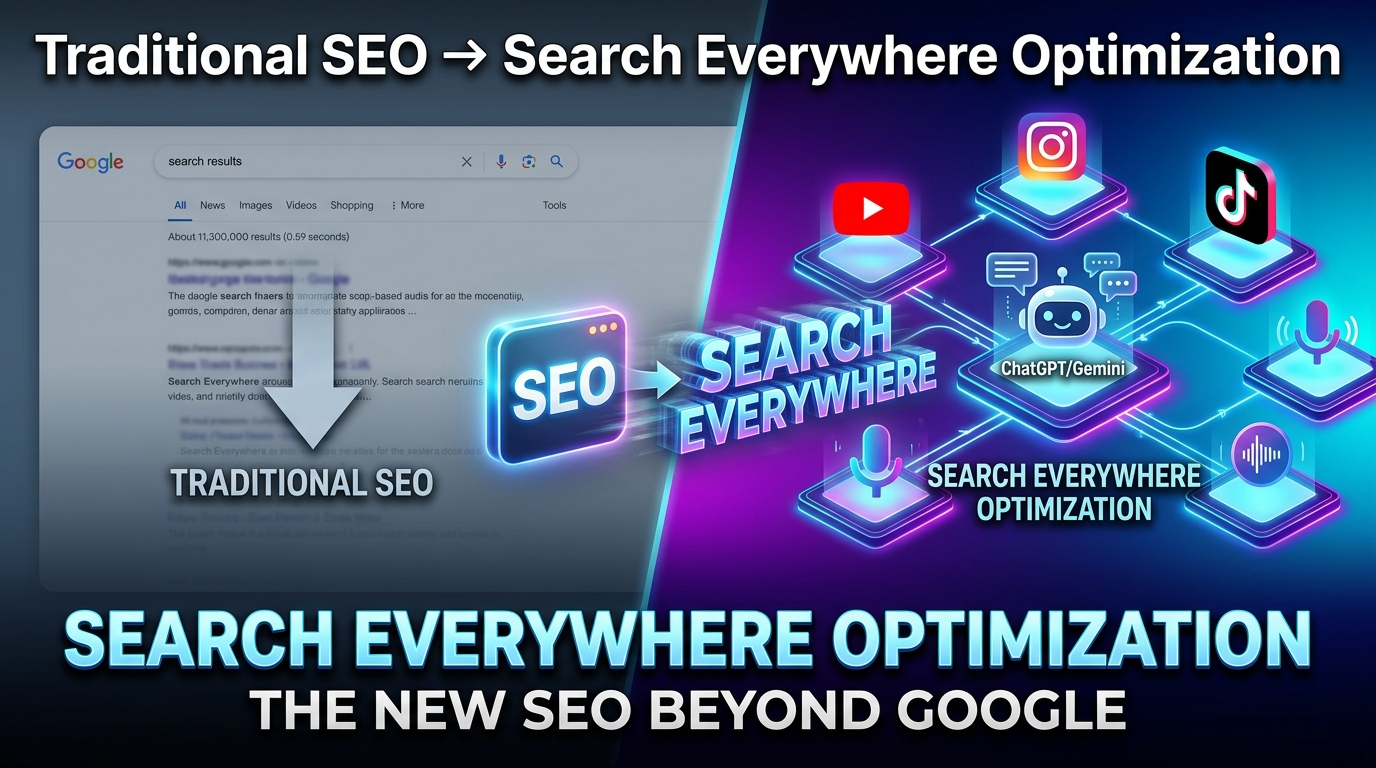
The digital search landscape is evolving rapidly. For many years, businesses focused almost entirely on ranking on Google. Traditional SEO strategies revolved around keywords, backlinks, technical optimisation, and search engine rankings. While these fundamentals still matter, user behaviour has changed significantly.
Today, people search for information everywhere. They search on social media platforms, video platforms, AI tools, online marketplaces, voice assistants, forums, and mobile apps. Instead of relying only on Google, users now discover products, services, and information across multiple digital platforms.
This shift has introduced a new approach known as Search Everywhere Optimization. It is a broader, smarter strategy designed to help businesses remain visible wherever audiences search online.
For brands, publishers, bloggers, and businesses, adapting to this new search environment is no longer optional. It is essential for long-term digital growth and online visibility.
What Is Search Everywhere Optimization?
Search Everywhere Optimization refers to the process of optimising digital content across multiple search and discovery platforms instead of focusing only on traditional search engines.
This strategy ensures that content can be discovered through:
Search engines
AI-powered tools
Social media platforms
Video platforms
E-commerce marketplaces
Voice search
Online communities
Mobile apps
Local search platforms
Modern consumers interact with different platforms depending on their goals.
For example:
A user looking for tutorials may search on YouTube.
A shopper may begin directly on Amazon.
Younger audiences may use TikTok or Instagram for recommendations.
Professionals often search on LinkedIn.
Many users now ask AI assistants for quick answers.
This means businesses need a multi-platform visibility strategy instead of relying solely on Google traffic.
Why Traditional SEO Is No Longer Enough
Traditional SEO remains important, but depending entirely on Google creates limitations and risks.
Search engines are changing because of:
AI-generated summaries
Zero-click search results
Personalised recommendations
Voice assistants
Social search trends
AI-powered answer engines
Many users now receive answers directly from search pages or AI tools without clicking on websites.
As a result, even websites with strong rankings may experience declining traffic if they fail to adapt.
Search Everywhere Optimization helps businesses diversify their visibility and maintain consistent digital reach across different platforms.
The Impact of AI on Search Behaviour
Artificial intelligence is transforming how users search for information online.
AI-powered systems can analyse vast amounts of content and provide direct answers instantly. Instead of browsing through multiple websites, users increasingly depend on AI-generated summaries and conversational responses.
This shift changes how content should be created.
Content that performs well in AI-driven search environments usually has the following qualities:
Clear structure
Accurate information
Concise explanations
Human-focused writing
Topical authority
Trustworthiness
Strong readability
AI systems favour content that demonstrates expertise while remaining easy to understand.
Businesses that publish high-quality, useful content are more likely to gain visibility in AI-generated search experiences.
The Major Platforms Included in Search Everywhere Optimization
Google Search
Google still plays a major role in digital discovery. However, modern optimisation goes beyond traditional organic rankings.
Content should now be optimised for:
AI-generated search summaries
Featured snippets
People Also Ask sections
Voice search
Image search
Local search visibility
Structured formatting and direct answers improve discoverability within modern search features.
YouTube Search
Video content has become one of the most powerful discovery tools online.
Many users prefer watching videos instead of reading lengthy articles. Tutorials, product demonstrations, reviews, and educational videos perform particularly well.
To optimise YouTube content effectively:
Use descriptive video titles
Write keyword-rich descriptions naturally
Add captions and subtitles
Create engaging thumbnails
Improve audience retention
Include timestamps where relevant
Businesses that combine written and video content often achieve stronger overall visibility.
Social Media Search
Social media platforms increasingly function as search engines.
Users actively search for:
Product recommendations
Lifestyle inspiration
Business advice
Fashion trends
Travel ideas
Tutorials
Local services
Platforms such as Instagram, TikTok, LinkedIn, Facebook, and Pinterest now influence search behaviour significantly.
Effective social search optimisation includes:
Writing searchable captions
Using relevant hashtags naturally
Optimising profiles and bios
Creating platform-specific content
Encouraging engagement and shares
Short-form content is especially effective for increasing visibility and audience reach.
Marketplace Search
E-commerce search is another important part of Search Everywhere Optimization.
Consumers frequently begin shopping journeys directly on online marketplaces rather than traditional search engines.
Product visibility depends on factors such as:
Product titles
Descriptions
Reviews
Images
Ratings
Pricing
Customer engagement
Brands that optimise marketplace listings effectively can generate strong sales without relying entirely on Google traffic.
Voice Search Optimisation
Voice search continues to grow because of smart devices and virtual assistants.
Voice searches are usually more conversational than text searches.
Examples include:
“What is the best digital marketing strategy?”
“How can I improve my website traffic?”
“Where can I find affordable restaurants nearby?”
To optimise for voice search:
Use conversational language
Answer questions directly
Add FAQ sections
Improve local SEO
Ensure mobile responsiveness
Natural language optimisation is becoming increasingly important.
Community-Based Search Platforms
Users trust recommendations and discussions from real communities.
Platforms such as Reddit, Quora, and niche forums influence buying decisions and brand credibility.
Businesses can benefit from these communities by:
Providing helpful answers
Sharing genuine expertise
Participating consistently
Building trust naturally
Avoiding overly promotional behaviour
Authenticity is essential on community-driven platforms.
Core Principles of Search Everywhere Optimization
Focus on User Intent
Modern optimisation starts with understanding user intent.
Instead of writing content purely for search engines, businesses should create content that genuinely helps readers solve problems.
Useful content typically:
Answers common questions
Provides practical solutions
Uses simple language
Delivers original insights
Creates a positive reading experience
User-focused content performs better across search engines, AI systems, and social platforms.
Build Topical Authority
Search platforms and AI systems prefer trusted sources with consistent expertise.
Publishing multiple high-quality articles within a niche strengthens authority.
For example, a digital marketing website should cover topics such as:
SEO
Content marketing
AI search optimisation
Social media marketing
Technical SEO
Analytics
Website performance
A well-connected content ecosystem improves credibility and discoverability.
Optimise for Multiple Content Formats
Different users prefer different types of content.
Some audiences prefer:
Blog posts
Videos
Podcasts
Infographics
Social media posts
Short-form videos
Repurposing content across formats expands reach and improves efficiency.
One article can become:
A YouTube video
LinkedIn content
Instagram carousels
Email newsletters
Podcast episodes
Short-form clips
This strategy increases visibility without constantly creating entirely new topics.
Improve User Experience
User experience strongly affects modern search performance.
Important factors include:
Fast-loading pages
Mobile-friendly design
Clear navigation
Readable formatting
Clean website layouts
Minimal intrusive advertising
Poor user experience often reduces engagement and increases bounce rates.
Use Semantic SEO
Search engines now understand topics and context better than exact keyword repetition.
Instead of overusing one keyword, modern SEO focuses on related concepts and natural language.
For example, content about Search Everywhere Optimization may naturally include terms like:
AI search optimisation
Multi-platform visibility
Omnichannel search
Digital discoverability
Social search optimisation
AI-driven search experiences
This improves topical relevance while maintaining readability.
How AI Overviews Are Reshaping SEO
AI-generated search summaries are changing how websites receive traffic.
Users increasingly consume information directly from AI-generated answers instead of visiting multiple websites.
To improve visibility within AI systems:
Use clear headings
Write concise paragraphs
Structure content logically
Answer questions directly
Include factual and trustworthy information
Use bullet points for clarity
Content that is easy to understand is more likely to appear in AI-generated summaries.
The Growing Importance of E-E-A-T
E-E-A-T stands for:
Experience
Expertise
Authoritativeness
Trustworthiness
These quality signals help search systems evaluate content credibility.
To strengthen E-E-A-T:
Publish accurate information
Demonstrate industry expertise
Maintain transparency
Build brand credibility
Update outdated content regularly
Use secure and trustworthy websites
Trust has become one of the most important ranking factors in modern SEO.
Content Strategies for Better Visibility
Create Helpful Educational Content
Educational content performs exceptionally well across search platforms.
Examples include:
Guides
Tutorials
Beginner resources
Step-by-step instructions
Industry explanations
Users value content that solves problems clearly and efficiently.
Develop Evergreen Content
Evergreen content remains useful over time and continues generating traffic consistently.
Examples include:
How-to articles
Industry basics
Educational resources
Strategy guides
Practical tutorials
Evergreen content supports long-term SEO growth.
Publish In-Depth Articles
Thin content struggles in competitive search environments.
Comprehensive content often performs better because it provides greater value.
High-quality long-form articles may include:
Examples
Case studies
Practical insights
Frequently asked questions
Actionable advice
Depth and quality improve authority and engagement.
Use Clear and Readable Formatting
Readers scan online content quickly.
Improve readability by using:
Short paragraphs
Descriptive headings
Bullet points
Simple sentence structures
Clear formatting
Well-structured content improves user retention and engagement.
Technical SEO Still Matters
Although search behaviour is changing, technical SEO remains essential.
Mobile Optimisation
Most users now browse primarily on mobile devices.
Responsive design improves:
User experience
Search rankings
Engagement
Conversion rates
Improve Website Speed
Slow-loading websites negatively affect performance.
To improve speed:
Compress images
Reduce unnecessary scripts
Use reliable hosting
Enable caching
Fast websites provide better user experiences.
Use Structured Data
Structured data helps search engines understand website content more effectively.
It can improve visibility in:
Rich snippets
FAQ results
Product listings
Review displays
Structured information supports AI understanding as well.
Strengthen Internal Linking
Internal links help search engines discover related content while guiding users through the website naturally.
Strong internal linking improves:
User engagement
Site structure
Topical authority
Crawling efficiency
Branding Matters More Than Ever
Strong brands perform better across search ecosystems.
Users are more likely to trust familiar brands than unknown websites.
Brand-building strategies include:
Consistent publishing
High-quality content
Professional design
Community engagement
Social proof
Expert positioning
Brand authority improves both search visibility and audience trust.
Common Mistakes to Avoid
Keyword Stuffing
Overusing keywords harms readability and may negatively affect rankings.
Keywords should appear naturally within useful content.
Publishing Low-Quality AI Content
Mass-produced content without originality often lacks depth and credibility.
AI tools should support content creation, not replace human insight completely.
Ignoring User Intent
Content must match what users actually want to find.
Poor alignment with user intent reduces engagement and search performance.
Depending Only on Google
Businesses that rely entirely on Google traffic risk losing visibility when algorithms change.
Diversifying traffic sources creates greater long-term stability.
The Future of Search Everywhere Optimization
Search behaviour will continue evolving toward:
AI-powered discovery
Conversational search
Personalised recommendations
Visual search
Voice interactions
Multi-platform engagement
Businesses that adapt early will gain a strong competitive advantage.
The future of digital visibility belongs to brands that create valuable, trustworthy, and accessible content across multiple platforms.
How Businesses Can Start Today
Implementing Search Everywhere Optimization does not require massive resources.
Businesses can begin by:
Auditing current online visibility
Identifying where target audiences search
Improving website quality
Publishing valuable educational content
Expanding onto multiple platforms
Repurposing content into various formats
Building topical authority consistently
Prioritising trust and user experience
Consistency is one of the most important success factors.
Conclusion
Search Everywhere Optimization represents the future of digital marketing and online visibility. Modern consumers no longer rely solely on traditional search engines to discover information, products, and services. Instead, they search across AI tools, social media platforms, marketplaces, video platforms, voice assistants, and online communities.
Businesses that continue focusing only on traditional SEO may struggle to maintain long-term visibility in this rapidly changing environment.
The most effective modern strategy is to create high-quality, trustworthy, and user-focused content that performs well across multiple platforms. By combining strong SEO fundamentals with AI-friendly content structures, social visibility, video optimisation, and audience engagement, businesses can build sustainable digital growth.
Success in modern search is no longer about ranking in one place. It is about building a strong presence everywhere your audience searches. Businesses looking to stay ahead of these changes can benefit from partnering with an experienced SEO Company in Singapore to develop a comprehensive search strategy that drives visibility, engagement, and long-term growth across multiple digital channels.