
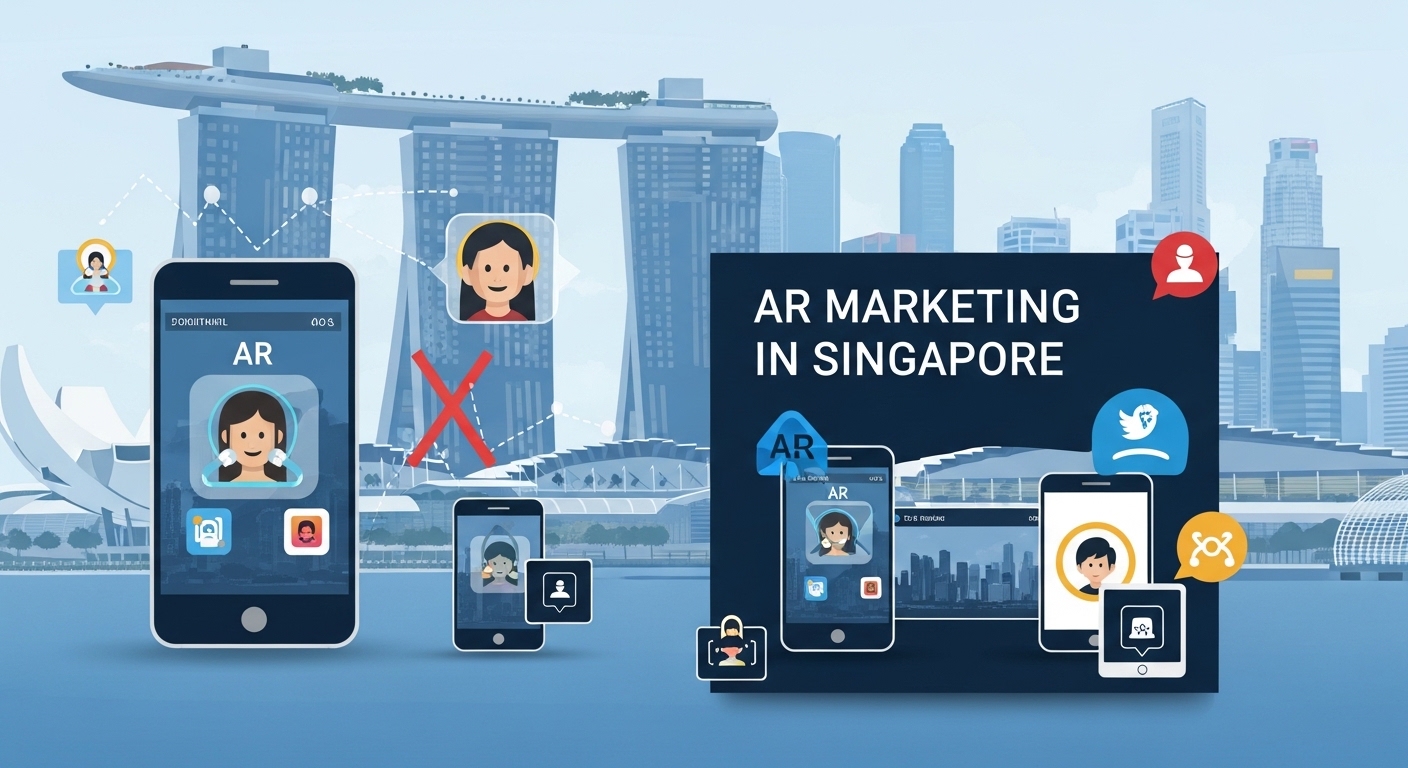
Digital marketing in Singapore is evolving faster than ever. With smartphone penetration at over 96 percent and a highly mobile-first population, brands are competing for attention in an increasingly crowded digital space. To stand out, businesses are adopting innovative tools, and augmented reality has emerged as one of the most powerful ways to engage audiences.
Unlike traditional marketing, AR creates interactive and immersive experiences that captivate users and enhance brand recall. Singaporean businesses across retail, tourism, real estate, and fashion are leveraging AR to drive engagement, improve conversions, and strengthen loyalty.
As competition intensifies and consumers expect highly personalised experiences, integrating AR into marketing strategies is no longer optional. It is essential. This article explores how digital marketing agencies in Singapore implement AR, the benefits it offers, the challenges, and future trends shaping the local market.
Why Augmented Reality Matters in Singapore’s Digital Marketing
AR is transforming digital marketing by offering highly interactive and engaging experiences. Here is why it has become a key tool for Singaporean brands:
-
AR increases customer engagement by encouraging users to interact with content, resulting in higher dwell times and deeper engagement. Local campaigns show up to 25–30 percent higher engagement rates compared to static content.
-
Immersive AR experiences enhance brand recall. Singapore’s Gardens by the Bay AR tours during festive seasons have shown significant social shares and visitor recall.
-
AR boosts conversion rates by allowing virtual try-ons for fashion, eyewear, or furniture, helping Singaporean consumers make confident purchase decisions and reducing returns.
-
AR creates shareable content on Instagram, TikTok, and Facebook, extending campaign reach organically.
-
Personalised AR experiences make content more relevant and engaging for individual users.
-
AR bridges online and offline shopping by allowing consumers to visualise products in real-world settings, enhancing trust and encouraging purchases.
How Singapore Digital Marketing Agencies Implement AR
Agencies in Singapore are adopting AR creatively to provide measurable results for clients. Some of the most effective applications include:
AR-Powered Advertisements
Interactive AR ads transform static campaigns into immersive experiences. Local examples include:
-
Razer Singapore created an AR ad experience for product launches, allowing users to visualise gaming peripherals in their own rooms.
-
Starbucks Singapore used AR filters during festive promotions to let customers interact with virtual beverages and collectibles.
Virtual Try-On Solutions
Virtual try-ons are a game-changer for fashion and beauty brands. AR allows customers to try before they buy:
-
Charles & Keith implemented AR for virtual shoe and bag try-ons online.
-
Sephora Singapore allows customers to test makeup products using AR on mobile devices.
Interactive Storefronts
AR enhances both in-store and e-commerce shopping:
-
IKEA Place app lets Singaporeans place furniture in their homes to check fit and style before purchase.
-
Uniqlo Singapore is experimenting with AR in flagship stores to provide interactive product displays and size guidance.
Gamification and AR Filters
Gamification with AR drives engagement and social sharing:
-
BreadTalk ran an AR filter campaign during festive seasons where users could unlock discounts by interacting with virtual treats.
-
Local cafes and lifestyle brands create branded AR filters on TikTok and Instagram to boost user-generated content.
Location-Based AR Marketing
Geo-targeted AR campaigns are effective in Singapore’s urban landscape:
-
Sentosa and Marina Bay Sands have used AR experiences for virtual tours and interactive promotions to attract tourists and locals.
-
Retailers leverage AR geo-filters to deliver discounts when users visit specific locations such as Orchard Road or VivoCity.
AR Applications Across Singapore Industries
AR is versatile and impacts multiple sectors beyond retail:
-
Real estate agencies like PropNex and ERA Realty use AR apps to let buyers visualise furnished homes without visiting in person.
-
Automotive dealerships provide AR experiences for virtual vehicle tours and feature demonstrations.
-
Tourism and hospitality attractions such as Singapore Zoo and Gardens by the Bay use AR for interactive visitor guides and virtual scavenger hunts.
-
Education and training institutions use AR in corporate workshops and learning modules to improve engagement and retention.
Benefits of AR for Singapore Businesses
Implementing AR delivers multiple advantages:
-
AR campaigns see longer interaction times and better brand recall.
-
Virtual try-ons and interactive demos improve customer satisfaction and confidence in purchase decisions.
-
Early adoption of AR helps local brands stand out in Singapore’s competitive digital landscape.
-
AR allows businesses to showcase products virtually, reducing the need for physical inventory.
-
AR integrates seamlessly across websites, apps, social media, and e-commerce platforms.
-
Agencies can track user interactions and behaviour, providing valuable data insights for optimisation.
Challenges of AR Adoption in Singapore
Despite the benefits, AR adoption has challenges:
-
High development costs require investment in software and expertise.
-
Not all smartphones or devices support AR, which may limit reach.
-
Some consumers may hesitate to use AR due to unfamiliarity.
-
AR apps often require access to cameras and location data, which must comply with Singapore’s Personal Data Protection Act.
-
AR campaigns need continuous updates to remain engaging as technology evolves.
Future Trends of AR in Singapore Digital Marketing
The future of AR is promising, with trends shaping the Singapore market:
-
AI-powered AR will personalise experiences in real time.
-
WebAR eliminates the need for app downloads, increasing accessibility.
-
Influencers will increasingly use AR to create interactive branded content.
-
Singapore’s 5G rollout enables smoother and more immersive AR experiences.
-
AR will integrate directly into social commerce and e-commerce platforms, enabling immersive shopping experiences.
How Singapore Businesses Can Leverage AR
Singaporean businesses can adopt AR effectively by:
-
Starting with high-impact campaigns such as virtual try-ons or interactive ads.
-
Partnering with experienced digital consultancy firms to align AR with broader marketing strategies.
-
Measuring performance using engagement metrics, dwell time, and conversion rates.
-
Integrating AR across multiple channels including social media, websites, and e-commerce platforms.
-
Staying updated on emerging technologies such as AI-powered AR and WebAR.
By adopting these strategies, local brands can create memorable experiences, increase engagement, and gain a competitive edge in Singapore’s digital market.
Conclusion
Augmented Reality is transforming digital marketing, enabling Singaporean brands to engage consumers in immersive and interactive ways. By working with digital marketing agencies, businesses can integrate AR into campaigns to improve engagement, increase conversions, and build long-term loyalty.
Brands that embrace AR today will be well-positioned for growth, delivering innovative marketing experiences that resonate with tech-savvy Singaporean consumers and outperform competitors.