Why Businesses Are Losing Traffic Even When Their Google Rankings Look Fine
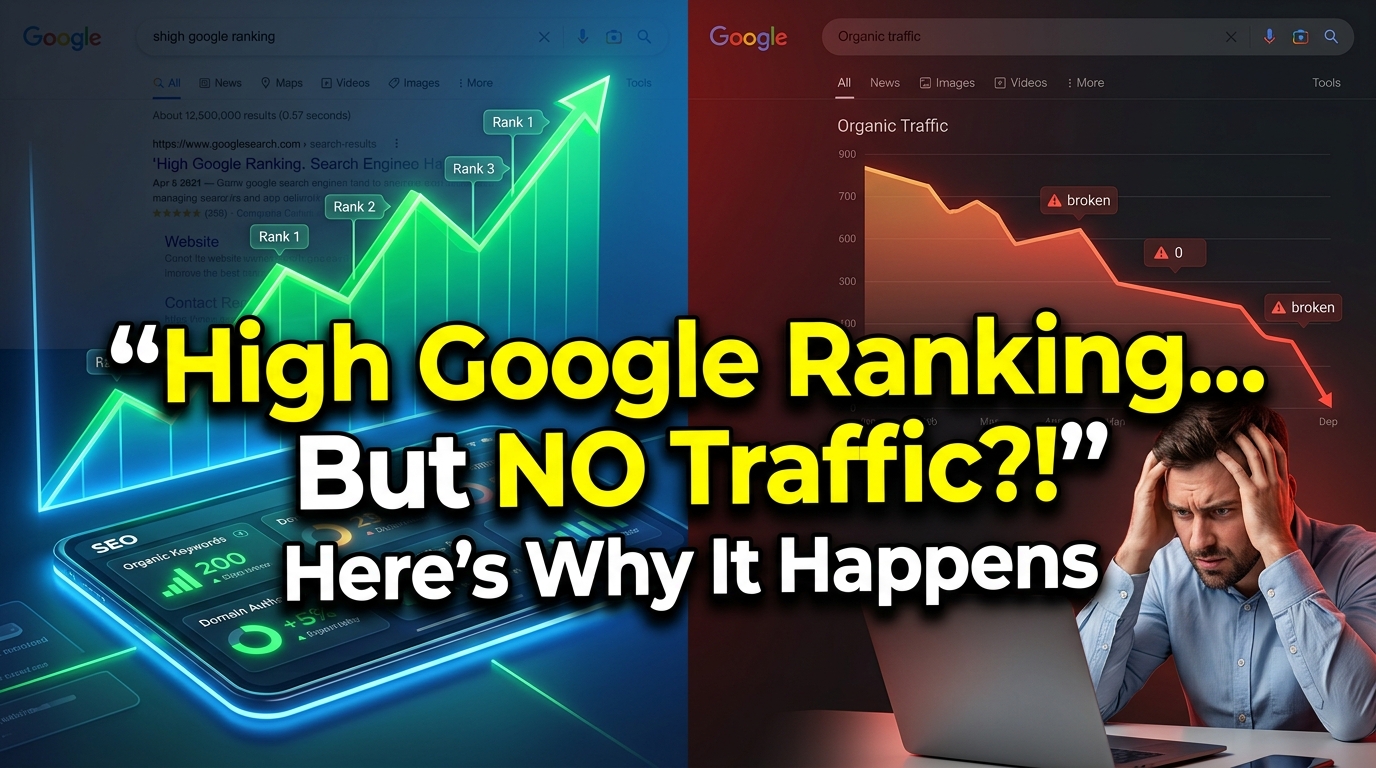
Many businesses assume that strong Google rankings automatically lead to steady website traffic. On paper, everything appears healthy. Important keywords still rank on the first page, branded searches remain stable, and SEO reports show solid visibility. Yet despite these positive signals, website traffic continues to decline.
This situation has become increasingly common across industries. Businesses that once relied heavily on organic search are discovering that rankings alone no longer guarantee clicks, leads, or conversions. The digital search landscape has evolved rapidly, and user behavior has changed along with it.
Today, Google’s search results include AI-generated summaries, featured snippets, local packs, shopping listings, videos, “People Also Ask” sections, and many other interactive features. These elements often reduce the number of users clicking traditional website listings. At the same time, people are increasingly finding answers through AI tools, voice assistants, social media platforms, forums, and community-driven content.
The result is a growing disconnect between rankings and actual traffic.
Understanding why this happens is essential for businesses that want to protect their online visibility, maintain lead generation, and stay competitive in modern search.
Rankings No Longer Equal Visibility
A few years ago, ranking in the top three search results almost guaranteed strong traffic. Today, search engine results pages are much more crowded and competitive.
Even if a website ranks highly, users may never reach the organic listing because the page is filled with:
AI-generated summaries
Featured snippets
Video carousels
Local business packs
Shopping results
Knowledge panels
Forum discussions
“People Also Ask” sections
These features push traditional organic listings further down the page.
A business may technically rank number one, but if several search features appear above it, actual visibility drops significantly. Users often find enough information directly within the search results and never click through to the website.
This is one of the biggest reasons businesses experience declining traffic despite stable rankings.
AI Overviews Are Changing Search Behavior
AI-powered search experiences are transforming how users interact with Google.
Instead of browsing multiple websites, users increasingly receive summarized answers directly on the search results page. These summaries combine information from various sources into one response, reducing the need to visit individual websites.
For example, when users search for:
“Best accounting software for small businesses”
“How to improve local SEO”
“Ways to reduce website bounce rate”
Google may generate a detailed AI summary that answers most of their questions instantly.
As a result:
Impressions may remain high
Rankings may stay stable
Click-through rates decline
Businesses that rely solely on traditional SEO metrics often fail to notice this shift until traffic losses become substantial.
Click-Through Rate Matters More Than Ever
Many businesses focus heavily on rankings while ignoring click-through rate (CTR).
CTR measures how often users click on a search result after seeing it. A page ranking in position three with a compelling title can outperform a page ranking in position one with weak messaging.
CTR can decline for several reasons:
Competitors use stronger headlines
Search features attract more attention
Meta descriptions feel outdated
Content no longer matches search intent
Users trust competing brands more
Modern SEO is no longer just about ranking on the first page. Businesses must also convince users to click.
Strong SEO titles should:
Address a clear problem
Create curiosity naturally
Offer immediate value
Match user intent
Avoid misleading clickbait
Improving CTR often increases traffic even without ranking improvements.
Search Intent Has Evolved
Search intent refers to the reason behind a user’s search query.
Google has become significantly better at understanding intent, and businesses that fail to align their content with user expectations often lose traffic.
For example, someone searching for “best CRM for startups” likely wants:
Product comparisons
Pricing details
Reviews
Real-world examples
Pros and cons
If a business provides only a generic product page instead of in-depth comparison content, users may ignore it even if it ranks highly.
Modern users expect:
Fast answers
Expert insights
Practical examples
Clear formatting
Trustworthy recommendations
Content that feels outdated, overly promotional, or shallow often loses engagement over time.
Businesses that consistently update content to match evolving search intent typically maintain stronger traffic performance.
Informational Searches Generate Fewer Clicks
Not all keywords create the same traffic opportunities anymore.
Informational searches are especially affected by zero-click behavior. A zero-click search occurs when users get the answer directly on the search page without visiting a website.
Examples include:
Definitions
Quick tutorials
Weather updates
Business hours
Simple comparisons
Calculations
Many businesses still target high-volume informational keywords without realizing their click potential has dropped dramatically.
This creates the illusion of strong SEO visibility while traffic continues to decline.
To counter this trend, businesses should focus on content that encourages deeper engagement, such as:
Original research
Case studies
Expert commentary
Industry analysis
Interactive tools
Comprehensive guides
Unique content gives users a stronger reason to visit the website itself.
Brand Authority Influences Clicks
Google increasingly rewards trusted brands.
When users recognize a brand name in search results, they are far more likely to click on it. This directly impacts CTR and long-term traffic growth.
Strong brand authority comes from signals such as:
Positive reviews
Media mentions
High-quality backlinks
Social proof
Thought leadership
Consistent content quality
Users are becoming more selective about which websites they trust, especially in industries involving finance, health, technology, or legal services.
A recognizable and trusted brand can outperform competitors with similar rankings simply because users feel more confident clicking the result.
User Experience Directly Affects SEO Performance
Google increasingly evaluates how users interact with websites after clicking.
If visitors quickly leave a page, struggle with navigation, or encounter slow loading speeds, both engagement and rankings may gradually decline.
Common user experience problems include:
Slow mobile performance
Excessive advertisements
Poor readability
Confusing layouts
Aggressive popups
Weak internal linking
Modern users expect websites to load quickly and provide immediate value.
Even if rankings remain stable temporarily, poor user experience often reduces engagement signals that influence long-term SEO performance.
Businesses should regularly improve:
Mobile responsiveness
Page speed
Navigation
Accessibility
Content structure
A better user experience usually improves both traffic and conversions.
Content Saturation Is Increasing Competition
The internet now contains more content than ever before.
Businesses compete not only against direct competitors but also against:
AI-generated content
Large publishers
Industry blogs
YouTube creators
Forums
Social media platforms
Publishing basic keyword-focused articles is no longer enough.
Google increasingly prioritizes content that demonstrates:
Experience
Expertise
Authority
Trustworthiness
Businesses losing traffic often discover that competitors are offering richer and more engaging experiences through:
Original insights
Better visuals
Video content
Updated statistics
More practical advice
The quality threshold for earning clicks and rankings has increased significantly.
Search Traffic Is Becoming More Fragmented
Users no longer discover businesses exclusively through Google.
Traffic now comes from multiple platforms, including:
YouTube
LinkedIn
Reddit
Instagram
Podcasts
AI assistants
Newsletters
Online communities
This fragmentation means businesses relying entirely on Google traffic face greater risk during algorithm updates and search changes.
Brands with diversified traffic sources are usually more resilient.
Repurposing content into:
Videos
Social media posts
Email campaigns
Podcasts
Visual guides
can increase visibility while reducing dependence on traditional SEO alone.
Technical SEO Still Matters
Even when rankings appear stable, hidden technical issues can still reduce traffic performance.
Common technical SEO problems include:
Slow indexing
Broken internal links
Duplicate content
Poor mobile usability
Crawl inefficiencies
Weak structured data
Structured data is becoming increasingly important because it helps search engines understand content more clearly for rich results and AI summaries.
Businesses should regularly audit their websites to identify technical weaknesses before they affect traffic further.
Businesses Must Adapt Beyond Traditional SEO
The biggest mistake businesses make is assuming SEO works the same way it did years ago.
Search visibility now depends on much more than keyword rankings alone.
Successful businesses focus on:
User intent
Brand authority
Content quality
User experience
AI visibility
Multi-channel marketing
Trust building
SEO remains highly valuable, but the rules have changed.
Businesses that adapt to modern search behavior can still grow organic visibility and generate qualified traffic, even in a highly competitive digital environment.
Those relying only on outdated SEO tactics often see traffic decline despite stable rankings.
Conclusion
Many businesses are discovering that strong Google rankings no longer guarantee strong website traffic. AI-generated summaries, zero-click searches, evolving user expectations, and increased competition have fundamentally changed how users interact with search results.
Modern SEO success depends on far more than rankings alone. Businesses must now focus on click-through rates, search intent, content quality, user experience, topical authority, and brand trust. At the same time, adapting content for AI-driven search experiences and diversifying traffic sources has become essential.
Companies that understand these shifts can continue attracting qualified visitors, generating leads, and growing online visibility. Those that ignore them risk losing traffic even when their rankings appear stable.
The businesses that thrive in the future will be the ones that prioritize genuine value, authoritative content, and user-focused experiences across every stage of the search journey. Working with an experienced SEO Company in Singapore can help businesses adapt to these changes, improve search performance, and build a sustainable strategy for long-term digital growth.